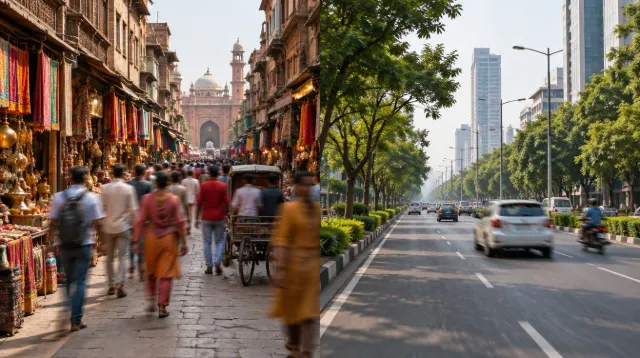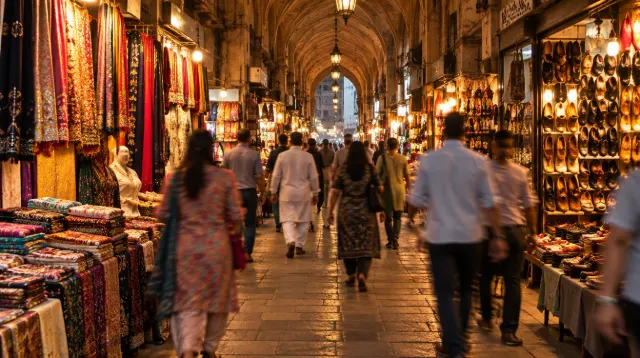
Markets and Malls in Islamabad
A guide to shopping in Islamabad: sector markets like Jinnah Super and Super Market, Aabpara, the big malls, weekly bazaars, crafts and bargains.

How Islamabad’s sector system works: what the letters and numbers mean, the character of E, F, G, H and I sectors, markazes, Blue Area and how addresses work.
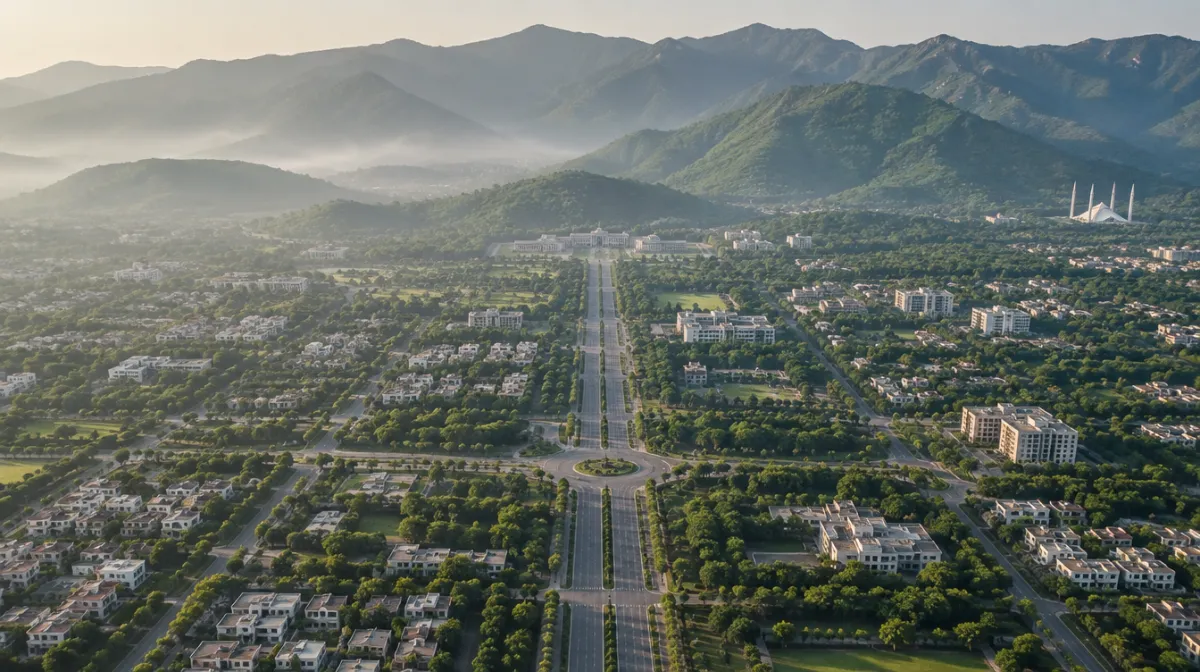
Islamabad is one of the few capitals in the world designed from scratch, and its grid of lettered sectors can be confusing at first. Once you understand the logic, though, finding your way around becomes easy.
In the late 1950s, Pakistan decided to build a new capital near Rawalpindi, at the foot of the Margalla Hills. The master plan was drawn up by the Greek planner Constantinos Doxiadis and his firm, and construction began in the early 1960s.
Doxiadis designed the city as a grid of self-contained neighbourhoods, called sectors, separated by green belts and wide avenues. The idea was that each sector would have its own homes, schools, shops, mosques and parks within walking distance.
Each sector has a letter and a number, such as F-7 or G-9.
A typical address reads: House 12, Street 5, F-7/2, Islamabad.
| Band | Character | Examples |
|---|---|---|
| D | Newer development near the hills | D-12 |
| E | Upscale residential, near the hills | E-7, E-11 |
| F | Established, sought-after residential areas | F-6, F-7, F-8, F-10, F-11 |
| G | Mixed residential, including government housing, and busy markets | G-6, G-9, G-10, G-11, G-13 |
| H | Largely institutional: universities, hospitals, graveyards | H-8, H-9, H-12 |
| I | Mainly industrial areas, with some housing | I-8, I-9, I-10 |
This is a generalisation. Every sector has its own mix, and newer areas keep changing.
At the heart of each sector is a markaz, a commercial centre with shops, restaurants, banks and offices. Some are better known by their own names:
Smaller neighbourhood shopping areas sit inside each sub-sector.
Blue Area is Islamabad’s central business district, a long strip of offices, banks and hotels along Jinnah Avenue between the F and G sectors. Towards the east are the main government buildings, and the Diplomatic Enclave, home to many embassies.
As the city grew, private housing schemes developed outside the original sectors, particularly along the Islamabad Expressway and towards the airport. If you are buying or renting in a private scheme, check its approval status first: the CDA publishes information on approved and unauthorised housing schemes.
Once you know your way around, our guide to the best things to do in Islamabad is a good next step.
It depends on budget and lifestyle. F and E sectors near the hills are popular and expensive; G sectors offer more varied prices and busy markets; newer sectors and private schemes often offer more space for the money. If you’re also weighing the twin city, compare Islamabad and Rawalpindi.
Markaz means “centre”. In Islamabad it refers to the central commercial area of each sector.
The original plan included more zones than were fully developed as residential sectors. Most day-to-day life happens in the D to I bands.

Every article is edited by a human and checked against our editorial policy. Spotted a mistake? Tell us.
A guide to shopping in Islamabad: sector markets like Jinnah Super and Super Market, Aabpara, the big malls, weekly bazaars, crafts and bargains.
Islamabad or Rawalpindi? The twin cities compared for living: cost, space, commutes, schools, shopping, green space and flood risk, and who each city suits.
The best things to do in Islamabad: Faisal Mosque, the Margalla Hills trails, Pakistan Monument, Lok Virsa, Saidpur Village, Rawal Lake, food streets and more.